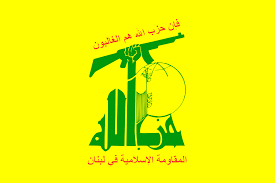
Hizballah, or “Party of God” is an Islamist political party and militant group based in Lebanon, which is led by Hassan Nasrallah. Hizballah was founded in Lebanon by Lebanese Shiites after the Israeli invasion into Lebanon in 1982. Hizballah’s main target is Israel, and has been carrying out attacks against Israeli targets for decades. Hizbollah created the Lebanese Media Group, with al-Nour Radio Station and al-Manar television station, to spread their views to Lebanese citizens but also to the entire world (Brittanica). They are currently located in the Shiite neighborhood of southern Beirut.
Al-Manar’s satellite station broadcasts for 24 hours a day. Al-Manar is extremely popular in Lebanon, being the third most watched television station in Lebanon. Israeli officials say al-Manar is also popular in the West Bank and in the Gaza Strip, second to al-Jazeera. Popularity for the station spikes when there is conflict in the south of Lebanon or Palestinian territories (Counter Extremism).
Al-Manar receives its funding through Hizballah, which is largely funded by Iran (Washington Institute). Hizballah uses al-Manar as a way to spread their messages and services to Palestinians. They also broadcast anti-American programming. al-Manar combines news, talk shows, documentaries and music programs to attract more people. Their use of music is a tool they use to keep Arabs frustrated about the Israeli-Arab conflict.
Some say it is propaganda promoting violent resistance (Counter Extremism). al-Manar shares Hizballah’s views and Hizballah actively promotes ands supports the television station. Al-Manar allows Hizballah to have a global reach.
The media environment in Egypt has been greatly affected by who is the president. Former president Mubarak shaped a media environment in Egypt that was not free by Freedom House (Pew Research Center). For the brief period of time that Morsi was in power, the media environment was considered partly free (Freedom House). However, since the regime of current Egyptian President Abdel Fattah al-Sisi, the media environment has reverted back and is now not free (Freedom House).
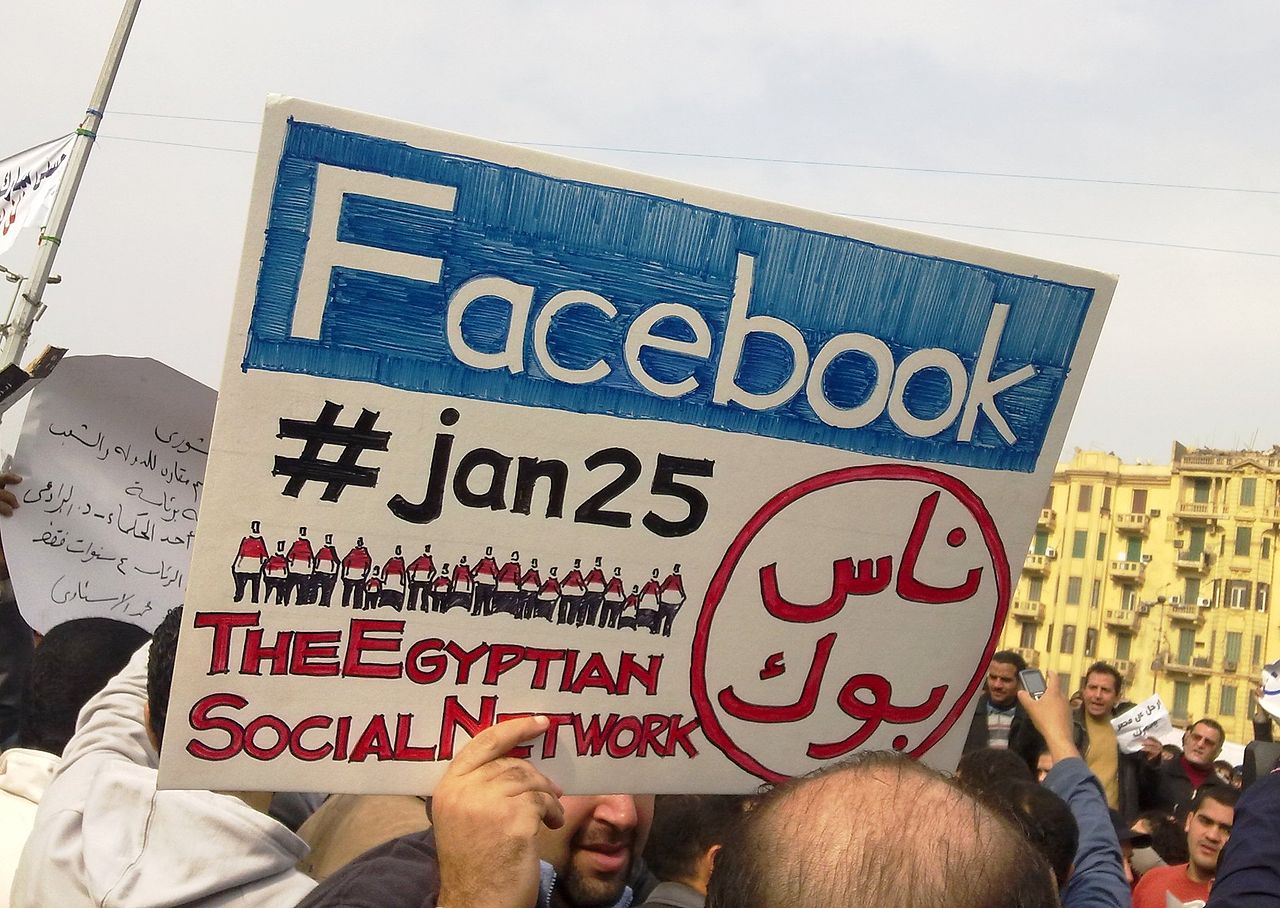
During the revolution of 2011, Mubarak was forced to resign while amidst violent demonstrations. These protests that occurred in Egypt’s capital had protestors from all different sectors of Egyptian society: more religious people, women, and secular Egyptians (Euro News). During the uprisings, the government tried to adopt post-censorship tactics, however it just brought more attention to the uprisings. The government shut down phone lines and the internet, they blocked SMS and social media. On the Day of Rage, the government blocked the entire internet across Egypt. However, some Egyptians got around this block by using forms of communication like Vambuser, or they used land lines to call friends to tweet and post for them (New York Times).
Sisi rose to the role of president of Egypt in 2014 with promises of eradicating the Muslim Brotherhood. Egypt’s electoral commissions stated that Sisi won the presidential elections with 96.1% of the vote. Democracy International said in no way were the elections democratic (The Guardian). Sisi’s new regime turned into a witch-hunt for dissenters. Egypt jails so many journalists under “false news” charges, which are ambiguous to journalists and media outlets. There are so many cyber crime laws that all media outlets are fearful of repercussions. There was also a new measure implemented that considers Facebook pages or blog accounts with more than 5,000 likes or followers a media outlet, which then can be prosecuted for charges like false news (Poynter).
Journalists have a very tough time performing their jobs in Egypt because they could be charged for anything. Sisi’s regime has reverted back to what Egypt’s government was like before Morsi and the 2011 protests.
The uprisings in Tunisia resulted in what is considered the only successful revolution from the Arab Uprisings. Today, Tunisia is a democracy, and receives a rating of free on Freedom House.
Zine el Abidine Ben Ali was elected in Tunisia in 1987 and stayed in power until he was ousted in 2011. At first, he promised democratic progress for Tunisia and began to loosen restrictions on the press. Freedom House considered the environment in Tunisia to be partly free during ben Ali’s first term in office (Al Jazeera). However, when he was reelected in 1994, the media environment took a turn for the worse. There was an abolishment of term limits, corruption and widespread censorship.
Before 2011, the media landscape was widely censored. The government blocked websites and arrested many journalists. There were some private media outlets, however those were owned by friends of ben Ali and his family. The media outlets that were independently owned practiced self-censorship out of fear of arrest or closure of their company. Immediately before the 2011 protests, online blogs developed, which discussed and sometimes criticized ben Ali’s regime. The government blocked those blogs, in addition to other websites such as Freedom House, Amnesty International and Reporters Without Borders (Al Jazeera).
In December 2010, Mohamed Bouazizi lit himself on fire due his anger with the corruption of ben Ali’s regime. He was educated, however had to sell fruit to make a living, and received constant harassment by government officials. Bouazizi’s self-immolation led to massive protests across Tunisia, which then spread to the rest of the Arab world. Videos of Bouazizi on fire spread across many social media platforms. The government tried to hack into blogs, shut down websites and arrest journalists to try to stop the continuation of the protests. As the protests continued, more police violence occurred, more censorship over the media, and there were more arrests. Commentators called the protests in Tunisia a media led revolution (Carnegie Endowment for International Peace).
Protests against ben Ali and the Tunisian government persisted for one month, and eventually on January 14, 2011, ben Ali and his family fled to Saudi Arabia (BBC). After the old regime was removed, the media environment improved a lot. By 2013, Freedom House declared Tunisia’s media environment to be partly free (Freedom House). While the media environment has improved drastically since the fall of ben Ali, there are still new laws being implemented that are ambiguous to journalists. For example, the anti-terrorism law is unclear and journalists could get charged easily (Al Jazeera).
Tunisia’s media environment has fluctuated since ben Ali left Tunisia. Another person lit himself on fire, and after that event, protests ensued again. During those protests, journalists were being harassed and some websites were blocked (Al Jazeera). Censorship has been reduced, however bloggers are still being arrested for attacking Tunisia’s common good.
The Iranian and Saudi Arabian Cold War encompasses the entire Middle East. Saudi Arabia wants power over the Middle East, and claims they have the right to this role due to the Arabian Peninsula’s history as the birthplace of Islam. However, the Islamic Republic coming to existence in 1979 in Iran threatens Saudi Arabia’s claim for power. Both countries are involved on opposing sides in many proxy wars throughout the Middle East, such as in Syria, Yemen and Iraq.
Behrouz Mehri/AFP
Media in Iran is controlled by the government, which is controlled by the Supreme Leader, Ayatollah Khamenei, who came to power in 1989. Freedom House states that Iran’s media situation is not free, with a score of 18/100 in 2018 (Freedom House). Recently in early 2019, a journalist was jailed in Iran for posting his comments on the corruption in Tehran (Committee to Protect Journalists). There are no private or independently owned TV or radio stations inside Iran, they are all controlled by the government. There are at least 300 newspapers within Iran, however they are funded by political parties that have the same views as the government. There are also many state radio stations, that are funded by the government, and also broadcast internationally in many different languages (Council on Foreign Relations). Many Iranians use a Virtual Private Network (VPN) to get around Iran’s highly-censored internet (Reporters Without Borders).
Egypt Today
Similar to Iran, Saudi Arabia also controls all aspects of media outlets. There are no private owned TV channels in Saudi Arabia. Especially after the 2011 protests that occurred across the Middle East, Saudi Arabia watches all media outlets carefully, and if they feel someone is threatening the government, that outlet will get shut down. Due to this, all journalists practice self-censorship to protect themselves (BBC). Freedom House declared Saudi Arabia as not free, with a score of 7/100 (Freedom House). There is widespread filtering on the internet, however citizens can still access social media sites. Jamal Khashoggi, a widely known journalist and Saudi critic was murdered by people tied to Saudi Arabia in 2018 after entering the Saudi consulate in Turkey. Although he comes from a family with close ties to the Saudi royal family, he was in exile after speaking critically of Mohammad bin Salman’s policies (BBC).
Vox
Both Saudi Arabia and Iran are involved in many wars across the Middle East, always supporting opposing groups, however. In Syria, Saudi Arabia supports the Syrian rebels against Assad’s government, while Iran supports Assad and his policies. In Yemen, Saudi Arabia supports the internationally recognized government, and according to Reuters, Iran is supporting the Houthi rebels who are fighting the government. Since the beginning of the Iraq war, Iran has been spreading influence throughout Shia-backed groups through media outlets (New York Times). Saudi Arabia is doing the same, by spreading Saudi broadcasting group Middle East Broadcasting Center (MBC) in Iraq to Sunni Iraqis (Arab News).
Since the 1990’s, Saudi Arabia has been building a huge media empire that is pan-Arab, just to influence news in the Middle East in their favor. Saudi Arabia is trying to influence media outlets in other areas as well. Currently, Saudi Arabia is pressuring Qatar to shut down Al-Jazeera. Saudi Arabia, and other countries such as Egypt, dislike Al-Jazeera because the news outlet connects to a wide range of people and according to them, provokes the opposing view (Washington Post).
Between Iran and Saudi Arabia, Iran is definitely more crafty at spreading their influence throughout the Middle East. After the 1979 revolution, Iran tried to export their revolution to other countries, and it doing so, they learned how to effectively spread their ideas.
On September 21, 2o14, the Houthi rebel forces in Yemen took over the capital, Sana’a. The Houthis forced Yemen President Hadi to resign, with the help of former president Saleh. During this raid, the Houthi forces took over private buildings and institutions (Middle East Monitor).
With the Houthi take over of Yemen’s capital, more information was filtered and censored than ever before. Before the conflict started, Yemen had a history of media filtering and censorship with the previous regimes. Opposition sites were blocked and a variety of websites that are deemed offensive (Foreign Policy).
With a new form of leadership in Yemen’s capital, the new authorities are censoring information by stopping information from exiting the country, and blocking access to communication entirely, by either cutting of the internet or phone services or limiting the amount of fuel people have access to to power their devices.
In an article named “Information Controls During Military Operations: The case of Yemen during the 2015 political and armed conflict”, the researchers study how the Houthi rebels use different tactics to prevent the flow of information throughout Yemen. Since 2014, Yemen’s access to information has been hindered due to deliberate power outages and fuel shortages, and censoring and filtering of all information (18). With fuel shortages and power outages, Yemenis cannot power their electronics to reach information.
The article discusses how the Houthi forces ban domestic media outlets from sending news updates to their subscribers (2). The forces raid and shut down TV stations, radio stations, arrest journalists and other newscasters and block websites. YemenNet, Yemen’s national internet service provider, is controlled by the Houthi forces. Nationally, YemenNet filters content, for example Israeli domains and opposition sites (3).
The Houthi forces are not the only actor in preventing information flow throughout Yemen. Attacks on electricity grids and the scarcity of fuel affects how Yemenis receive information. People cannot turn on their televisions, computers or phones to receive information without electricity or fuel for generators. The Saudi-led coalition blockades at big ports are preventing the flow of fuel throughout the country (8). Shortages in fuel and the inconsistent electricity access has prevented newspapers from publishing papers (14).
The researchers of the article also talk about The Yemen Cyber Army, a group to claim to have hacked into Saudi Arabia’s foreign ministry, and a group that some speculate it has connections to Iran (Franceschi-Bicchierai), is also affecting the information within Yemen. Similar to Syria’s Syrian Electronic Army, the Yemen Cyber Army targets websites and spreads pro-regime tendencies and also targets Saudi websites (25).
The article talks about how a Canada-based company called NetSweeper is used by Yemen’s internet service provider. These products are used to filter political information, censor private and independent news outlets, and all websites with the Israeli domain (2). They found that NetSweeper is actively updating their devices within Yemen, however was implemented before the Houthi takeover of Yemen’s capital.
The article discusses how even though the Houthi forces implemented harsh censorship of information by means of attacking individual journalists or attacking stations, or blocking websites, there was already an advanced program that was used to block information (56). The physical violent attacks on the flow of information throughout the country is layered with a sophisticated contracted company that filters information makes Yemenis access to information next to impossible.
Why do people watch TV over reading a book or taking a walk? From my personal experience, my friend’s experience and my father’s experience, we watch TV to unwind, destress and find entertainment. Sometimes we watch TV for educational purposes, perhaps on a PBS special or documentary.
My friend, who is 21 years old, will watch around 5 hours of TV a day when she is at home on a break from school. During the school year, she mostly watches TV on the weekends for a couple of hours. At home, she will watch TV shows on cable, however at school she only streams shows from Netflix or Hulu or Amazon. My friend looks for TV shows that have story lines, like Dexter, or TV shows with drama like 90210. Additionally, she enjoys watching sports games on TV. My friend studied abroad in Spain and recalls watching the news on TV every dinner with her host family. However, in America, she rarely watches the news on the TV and if she does, she watches it with her grandma. She finds her news from other sources, like websites or news apps. For my friend, it depends on what TV show she is watching to determine whether or not she will have her phone out. If the show is detailed and complex, she will not be on her phone, however if the show is mindless, she will probably be scrolling through social media apps while watching the show.
My dad, who is 65 years old, watches around 4 hours of TV a week. He mostly watches movies on TV, and rarely finds himself searching for TV shows to watch. My dad watches TV for entertainment and relaxation after long days at work. He does not watch the news on TV – he does not think TV news is a good way to learn about current events. He reads the newspaper every morning, listens to NPR, and looks at news websites. My dad will never be on his phone while watching TV.
At school, the TV shows I watch are shows that I can stream on Netflix and Hulu and Amazon, and some competition shows that I stream through On Demand or other websites, or documentaries. When I watch TV, it is mostly to destress after a busy week of school, to relax after a long day or to hang out with my friends. When I watch TV shows I am looking for entertainment and also a way to take my mind off my schoolwork. I watch documentaries for educational purposes but also because of my curiosity about the specific subject, for example about the ocean or space, or major historical events. I do not watch TV for news – I find out about the news from my news apps or news websites. Similar to my friend, who is also 21 years old, it depends on the TV show whether or not I will have my phone out. When I watch complex TV shows like Game of Thrones, I will probably not be also looking at my cellphone. However, when I watch competition shows, like So You Think You Can Dance, I will probably simultaneously be scrolling through my phone.
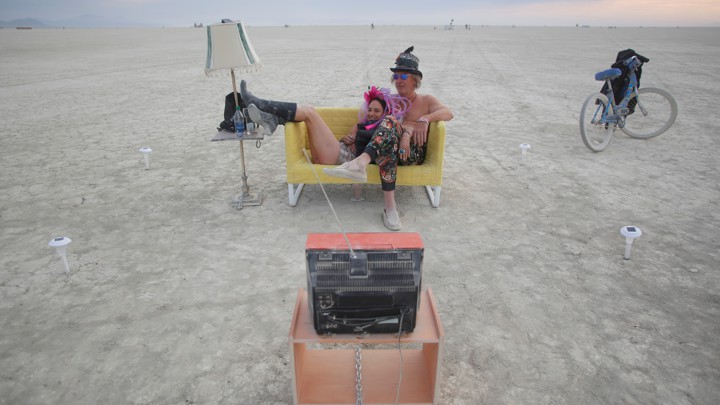
Watching TV can be a welcome refuge after long busy days at work or at school. Binge-watching TV shows seem to be desirable for people because we want the entertainment but also an escape. We can escape by becoming engrossed in a storyline that can take our minds off of real life. It is somewhat surprising that we are still so consumed with watching TV when our smartphones and other streaming services have consumed our lives.
Journalists in Yemen are victim to threats, attacks and abductions from all sides fighting in the war. Yemeni journalists who report on the militias face threats from all organizations, the Yemeni government and its supporters, the Houthis or AQAP (Committee to Protect Journalists). In 2018, Yemen was rated number 167 out of 180 in the World Press Freedom Index. Currently, at least ten journalists are being held by the Houthis and at at least one is being held by al-Qaeda (Reporters Without Borders). In 2015, five journalists were killed in Yemen, in 2016, six were killed, 2017, two were killed and in 2018 three journalists were murdered (Committee to Protect Journalists). The numerous attacks attacks against journalists in Yemen has threatened the longevity of independent reporting in Yemen.
Reuters/Anees Mahyoub
In areas controlled by the “legitimate” government, journalists are subjected to abuses by the United Arab Emirates’ militias. Independent local media coverage is uncommon because the majority of media outlets are controlled by the different parties. Websites are mostly blocked from civilians because the Houthis took control of the Ministry of Telecommunications in 2015. Citizen journalists in Yemen are constantly watched and can be arrested for social media posts (Reporters Without Borders).
Journalists that are critical of Houthis cannot operate safely in Houthi-controlled areas. Aden and other southern cities that used to be safe are not anymore due to the increase of violence from militias. Specifically, armed groups that are backed by the United Arab Emirates. The Security Belt and the Hadrami Elite Forces, both militias who report directly to the UAE, put immense pressure on local media outlets to not criticize the UAE or the Arab Coalition, or any country supporting the Yemeni government. Often, journalists turn to self-censorship (Shilad). When journalists self-censor, they feel the need to give the correct answer to protect themselves or their organization. Journalists self-censor their work because they are anticipating censorship from a violent group.
Akhbar al-Youm logo
The Security Belt militia attacked and detained the Akhbar al-Youm printing press. The Shomou Foundation, who runs the printing press relocated and journalists that were detained were released on the condition that they would stop working for the Shomou Foundation. The paper was known for criticizing Yemeni government policies, the United Arab Emirates and Saudi Arabia (Shilad).
The satellite TV channel Belqees stopped reporting in the western coastal region because they received many threats from the Security Belt. The TV channel was told they would be attacked if they hosted independent journalists who criticized the Arab coalition. The Security Belt has also banned a journalist, Sami al-Kaf from making an appearance on Belqees. al-Kaf is known for speaking out against the Yemeni government for the continued fighting and instability in the port city of Aden (Shilad).
AFP/Ahmad al-Basha
On September 16, 2018, the Saudi-led coalition attacked a Houthi radio station where at least four people were killed. Sherif Mansour spoke out after the attack stating the “international community should send a clear message to coalition authorities that the media are never legitimate military targets.” Houthi affiliated media outlets have been legitimate military targets for the Yemeni government (Committee to Protect Journalists).
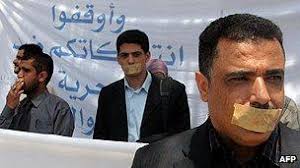
Yemeni journalists are living in constant fear while they report in Yemen. They are constantly watched and they receive threats after they share any information. Autocrats not protecting human rights have provided an easy channel for brutal leaders to get away with atrocities against their people, especially against journalists and media outlets (IFEX).
The purpose of journalism is to provide citizens with information to be an active member of the society and the world. Citizens of the informed public are given the opportunity to understand their country, the issues that face their fellow people and how they can act to improve their lives. Additionally, journalism allows citizens to understand the changes throughout the world, whether there are government changes, wars, or entertainment news.
Governments play a role in journalism within their respective countries. In more authoritarian countries, governments are be more concerned with broadcast media than print media. Radio and TV are instant forms of communication. Radio hosts and TV newscasters can say whatever is on their mind and potentially millions of people could hear it. If authoritarian governments hear a radio host or TV newscaster speak out against their power, they can censor them after the broadcast, however many people have already heard the message. Additionally, radio and TV are more emotive, which can be more dangerous to to authoritarian governments. You can hear passion in people’s voices over the radio and can see moving pictures over videos over the television. These images and sounds can inspire people to take action against their government. Further, broadcast media reaches out to those who are illiterate. In a time with just print media, the literate citizens were the only individuals who could be informed citizens.
Broadcast media also allows citizens to pick up signals from neighboring countries. In Yemen, citizens can pick up broadcasts from Saudi Arabia and Oman and potentially hear stories and events that are not provided to Yemenis from their domestic news sources (Yemen Media Landscape).
With the rise of broadcast journalism and citizens having the ability to pick up signals from outside their own country, people started hearing information that they never would have heard before. Al Jazeera came in and told people what governments wouldn’t, and it inspired some people into action (Lynch). Al Jazeera allowed journalist from the Middle East to write stories about their own lives, cultures and governments and not depend on foreign news sources. Al Jazeera was not a spokesperson for the governments in the region – it allowed citizens of the Middle East to hear opinions that potentially could critique the governments (Lust).
The Arab uprisings in 2011 showed what a large role broadcast media and the internet could play in inspiring citizens to act out against their authoritarian governments. Technology allowed people to hear information that the government could not control and additionally, reaching people that before had not been active citizens (Lust). Al Jazeera allowed citizens who were actively participating in the protests to send in their videos to be then shared throughout the country, the region, and further the entire world, as opposed to before, when the governments would only share news that they wanted the world to hear (Lust).
“Citizen journalism, in-country networks, and transnational networks themselves later became ways through which the internet and mobile phones could be used to coordinate public action on the street” (Lust, 286). Egypt used these networks and mobile phones to inform and rally people to the protests to fight against the regime.
“Journalism is the activity of gathering, assessing, creating, and presenting news and information” (American Press Institute). Mass media outlets provide citizens with the events happening in the world, but also have the potential to inspire a movement. Questions arise when thinking does mass media portray the reality, or just what governments want their citizens to hear? Specifically in the Middle East, with the advent of Al Jazeera and technological developments such as the internet and social media that allow journalism to be a larger representation of the people, a new active public sphere as emerged (Hafez). Journalism provides a space (while in some cases still heavily regulated) for people to share their stories, have debates and discuss topics that could never have been discussed before.
Sources: Lynch, Marc. 2007. Voices of the New Arab Public: Iraq, al-Jazeera, and Middle East Politics Today. New York: Columbia University Press
Hafez, Kai (editor). 2008. Arab Media: Power and Weakness New York: Continuum
Lust, Ellen (editor). 2016. The Middle East, 14th Edition. Thousand Oaks, CA: CQ Press.
Years of civil unrest and war have changed Yemen’s media landscape for the worse. Yemen’s media situation disintegrated in 2015 when the Houthi rebels took control of Sana’a, the capital. In the North, the circulation of press associated with President Hadi was blocked and discouraged. Journalists were targeted, arrested, or kidnapped (Yemen Media Landscape). The Yemeni press was, and still is, under threat from all sides and journalists have a difficult time reporting amidst the war zone.
The Freedom House press freedom rating states that Yemen’s media is not free. Houthi rebels block and censor any existing media outlets that they do not own. Journalists who are brave enough to continue working have to play a game – they either support or are against the government and face a dangerous road by taking either side. They risk their lives covering the war. Amnesty International and other organizations have published letters urging Houthi rebels to release innocent journalists who are being held without a charge or trial (Freedom House). Many journalists in Yemen have been killed in Saudi air-raids that are fighting the Houthis (BBC).
TV and radio are the dominate media scene in Yemen. Since the outbreak of war, many publications have stopped publishing physical newspapers. There are no more English-language publications (BBC). The State TV is stuck between rebel Houthis and the Hadi government – they each have their own version of two main channels: Yemen TV and Aden TV (Yemen Media Landscape). Private satellite TVs operate either inside Yemen or from abroad and some Yemen citizens can reach a signal. According to the BBC, in 2017, there were 6.9 million internet users. There is only one internet service provider, it is state run and is shut down constantly by the Houthi-controlled Communications Ministry. All anti-Houthi content is filtered (BBC).
A list of Yemeni news outlets:
Newspapers:
Al-Thawrah – (The Revolution), government-owned daily, under Houthi control
Al-Yaman al-Yawm (Yemen Today) – associated with family of late ex-President Saleh
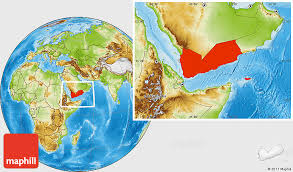
Yemen, a mountainous and arid country on the south western corner of the Arabian peninsula has a population of over 28 million people (CIA World Factbook). The majority of the population speaks Arabic and practices Islam. Immigrants originating from the Horn Africa have been moving to Yemen, however the connection between Yemen and the African continent was established long ago through trade and Yemeni and African people moving between the two places. Yemen’s strategic placement on the Red Sea has allowed its culture, history and economy to be influenced by ancient and modern trade and communication routes (Encyclopedia Britannica).
Around the 15th century, a Yemeni Sufi religious order discovered the beneficial properties of coffee. This discovery led to Yemen and the Red Sea being a center for conflict for powers like the Egyptians, Ottomans and and other European powers that wanted to control the coffee market along with the spices and other goods flowing through the region (Encyclopedia Britannica).
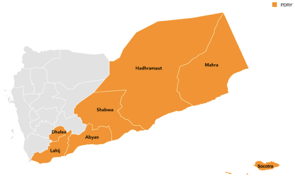
Yemen was divided into two countries until 1990. The North was a monarchy that was set in place since the year 900 AD. This monarchy was overthrown by a group called the Free Officers in 1962. The South was a British colony until 1967 when a Marxist group overthrew British power in Yemen.
Until 1962, the North was a Zaydi Monarchy, or “Imamate”. Zaidism is a sect of Shia Islam that was founded in the eighth century. The Free Officers, inspired by Egypt’s Free Officers, took power and a civil war erupted in North Yemen until 1970. During the civil war, the Zaydis received support from Saudi Arabia, due to the fact that they were a monarchy (CIA World Factbook). Egypt’s president Nasser supported the ‘republican’ forces. However, after the war, a weak government was established. The government did not control the population or the territory. The population was very dispersed which made it hard for the government to assert any control. Tribal loyalties, which had been existing for many years, were more significant in Yemen than in other countries in the region. Tribal military power was significant, and tribes used their power to resist government forces and government control. The governance that existed in Yemen was conducted primarily through tribal alliances.
The British Empire set up a protectorate around the port of Aden in South Yemen in the 19th century and this lasted until 1967. An alliance between nationalist and leftist movements sought independence which led to the British leaving. The new government took on a Marxist orientation and they changed the name of southern Yemen from the People’s Republic of Southern Yemen to the People’s Democratic Republic of Yemen (CIA World Factbook). During this time, massive amounts of Yemenis migrated from the south to the north, which created hostility between the two parts of the country (Lust). This was the only Marxist government in the Arab world. Saudi Arabia opposed this government.
North and South Yemen united in 1990. The governments in both states were unpopular and both were experiencing economic difficulties with a growing population and a scarcity of resources. The idea of uniting both states had a lot of support from both sides. The leaders of both states quickly assembled the unification, and the northern region soon dominated the south. This control from the north over the south led to more southern resentment (Lust). A civil war broke out in 1994 led by a southern secessionist movement, however it was subdued by Northern troops.
Religion holds a large part in the history of Yemen. In the 1800’s, Zaydi Imams adopted Sunni legal principles which created a political connection between Yemen’s Zaydi and Sunni populations. Saudi Arabia, itself a Sunni state, spread Salafist ideals into Yemen to promote Sunni teachings. In 1952, the Yemeni government started to promote a nonsectarian Islam, one that would embody a national Yemeni identity rather than a Sunni or Zaydi identity. Saudi Arabia promoted Salafism and Wahhabism (stemming from Sunni Islam) which is hostile toward Zaydis. Thus, a Zaydi revivalist movement sprouted against Salafism. A man named Badr al-Din al-Houthi had his own viewpoint on Zaydi revivalism. This movement soon came to be known as the Houthis and they adopted Iranian slogans in 2003. This movement despised Israel and the United States and suspicions arose amongst them that the Yemeni government supported Salafi missionaries from Saudi Arabia. Additionally, the Yemeni government had suspicions that Houthis were agents of Iran (Oxford Islamic Studies).
Houthi Symbol
In 2011, in line with other uprisings in Tunisia and Egypt, Yemenis began public rallies against President Ali Abdullah Salih. These demonstrations were sparked by complaints over a high unemployment rate, poor economic conditions and rampant corruption (Lust). The opposition pressed for President Salih’s resignation, and he eventually did so by signing the GCC Initiative in November 2011 and transferred his powers. The GCC Initiative required a National Dialogue Conference (NDC) to discuss national issues, however the Houthis did not believe that their needs were being met through the NDC. The Houthis then started to spread their control into the north and joined alliances with the former President Salih for purely strategic reasons (CIA World Factbook).
In 2015, the Houthi rebels controlled the capital of Sana’a and surrounded the presidential palace. Also in 2015, the Saudi King Abdullah died and Mohammad bin Salman became the Defense Minister of Saudi Arabia. Mohammad bin Salman, nervous of Yemeni instability and scared of Iran spreading its influence into Yemen started Operation Decisive Storm and started bombing the Houthis and their allies (CIA World Factbook).
Currently, there is a horrible humanitarian crisis occurring in Yemen. More than 22 million people are in need of humanitarian aid. People are dying from American-made bombs by means of the Saudi Arabian forces and citizens are experiencing torture in Houthi prisons. Saudi Arabia has implemented a blockade so humanitarian aid has a hard time getting into Yemen. Al-Qaeda in the Arabian Peninsula (AQAP) has taken advantage of the instability in Yemen and has established a following. In December 2018 the Houthis and Yemen government participated in UN-brokered peace talks (Al Jazeera).
Sources: Lust, Ellen. The Middle East. 14th ed. University of Gothenburg. 2017.








 Media in the Middle East