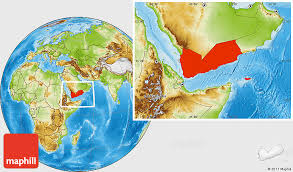
Yemen, a mountainous and arid country on the south western corner of the Arabian peninsula has a population of over 28 million people (CIA World Factbook). The majority of the population speaks Arabic and practices Islam. Immigrants originating from the Horn Africa have been moving to Yemen, however the connection between Yemen and the African continent was established long ago through trade and Yemeni and African people moving between the two places. Yemen’s strategic placement on the Red Sea has allowed its culture, history and economy to be influenced by ancient and modern trade and communication routes (Encyclopedia Britannica).
Around the 15th century, a Yemeni Sufi religious order discovered the beneficial properties of coffee. This discovery led to Yemen and the Red Sea being a center for conflict for powers like the Egyptians, Ottomans and and other European powers that wanted to control the coffee market along with the spices and other goods flowing through the region (Encyclopedia Britannica).
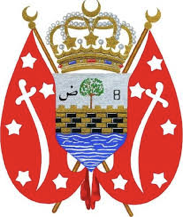
Yemen was divided into two countries until 1990. The North was a monarchy that was set in place since the year 900 AD. This monarchy was overthrown by a group called the Free Officers in 1962. The South was a British colony until 1967 when a Marxist group overthrew British power in Yemen.

Until 1962, the North was a Zaydi Monarchy, or “Imamate”. Zaidism is a sect of Shia Islam that was founded in the eighth century. The Free Officers, inspired by Egypt’s Free Officers, took power and a civil war erupted in North Yemen until 1970. During the civil war, the Zaydis received support from Saudi Arabia, due to the fact that they were a monarchy (CIA World Factbook). Egypt’s president Nasser supported the ‘republican’ forces. However, after the war, a weak government was established. The government did not control the population or the territory. The population was very dispersed which made it hard for the government to assert any control. Tribal loyalties, which had been existing for many years, were more significant in Yemen than in other countries in the region. Tribal military power was significant, and tribes used their power to resist government forces and government control. The governance that existed in Yemen was conducted primarily through tribal alliances.
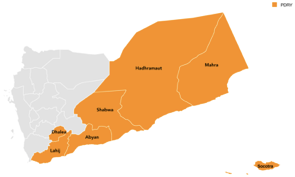
The British Empire set up a protectorate around the port of Aden in South Yemen in the 19th century and this lasted until 1967. An alliance between nationalist and leftist movements sought independence which led to the British leaving. The new government took on a Marxist orientation and they changed the name of southern Yemen from the People’s Republic of Southern Yemen to the People’s Democratic Republic of Yemen (CIA World Factbook). During this time, massive amounts of Yemenis migrated from the south to the north, which created hostility between the two parts of the country (Lust). This was the only Marxist government in the Arab world. Saudi Arabia opposed this government.
North and South Yemen united in 1990. The governments in both states were unpopular and both were experiencing economic difficulties with a growing population and a scarcity of resources. The idea of uniting both states had a lot of support from both sides. The leaders of both states quickly assembled the unification, and the northern region soon dominated the south. This control from the north over the south led to more southern resentment (Lust). A civil war broke out in 1994 led by a southern secessionist movement, however it was subdued by Northern troops.
Religion holds a large part in the history of Yemen. In the 1800’s, Zaydi Imams adopted Sunni legal principles which created a political connection between Yemen’s Zaydi and Sunni populations. Saudi Arabia, itself a Sunni state, spread Salafist ideals into Yemen to promote Sunni teachings. In 1952, the Yemeni government started to promote a nonsectarian Islam, one that would embody a national Yemeni identity rather than a Sunni or Zaydi identity. Saudi Arabia promoted Salafism and Wahhabism (stemming from Sunni Islam) which is hostile toward Zaydis. Thus, a Zaydi revivalist movement sprouted against Salafism. A man named Badr al-Din al-Houthi had his own viewpoint on Zaydi revivalism. This movement soon came to be known as the Houthis and they adopted Iranian slogans in 2003. This movement despised Israel and the United States and suspicions arose amongst them that the Yemeni government supported Salafi missionaries from Saudi Arabia. Additionally, the Yemeni government had suspicions that Houthis were agents of Iran (Oxford Islamic Studies).

In 2011, in line with other uprisings in Tunisia and Egypt, Yemenis began public rallies against President Ali Abdullah Salih. These demonstrations were sparked by complaints over a high unemployment rate, poor economic conditions and rampant corruption (Lust). The opposition pressed for President Salih’s resignation, and he eventually did so by signing the GCC Initiative in November 2011 and transferred his powers. The GCC Initiative required a National Dialogue Conference (NDC) to discuss national issues, however the Houthis did not believe that their needs were being met through the NDC. The Houthis then started to spread their control into the north and joined alliances with the former President Salih for purely strategic reasons (CIA World Factbook).
In 2015, the Houthi rebels controlled the capital of Sana’a and surrounded the presidential palace. Also in 2015, the Saudi King Abdullah died and Mohammad bin Salman became the Defense Minister of Saudi Arabia. Mohammad bin Salman, nervous of Yemeni instability and scared of Iran spreading its influence into Yemen started Operation Decisive Storm and started bombing the Houthis and their allies (CIA World Factbook).

Currently, there is a horrible humanitarian crisis occurring in Yemen. More than 22 million people are in need of humanitarian aid. People are dying from American-made bombs by means of the Saudi Arabian forces and citizens are experiencing torture in Houthi prisons. Saudi Arabia has implemented a blockade so humanitarian aid has a hard time getting into Yemen. Al-Qaeda in the Arabian Peninsula (AQAP) has taken advantage of the instability in Yemen and has established a following. In December 2018 the Houthis and Yemen government participated in UN-brokered peace talks (Al Jazeera).
Sources:
Lust, Ellen. The Middle East. 14th ed. University of Gothenburg. 2017.


